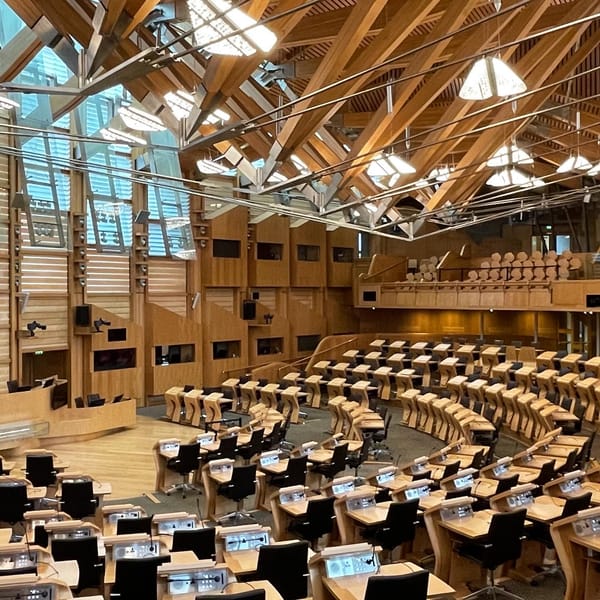
Resourcefulness
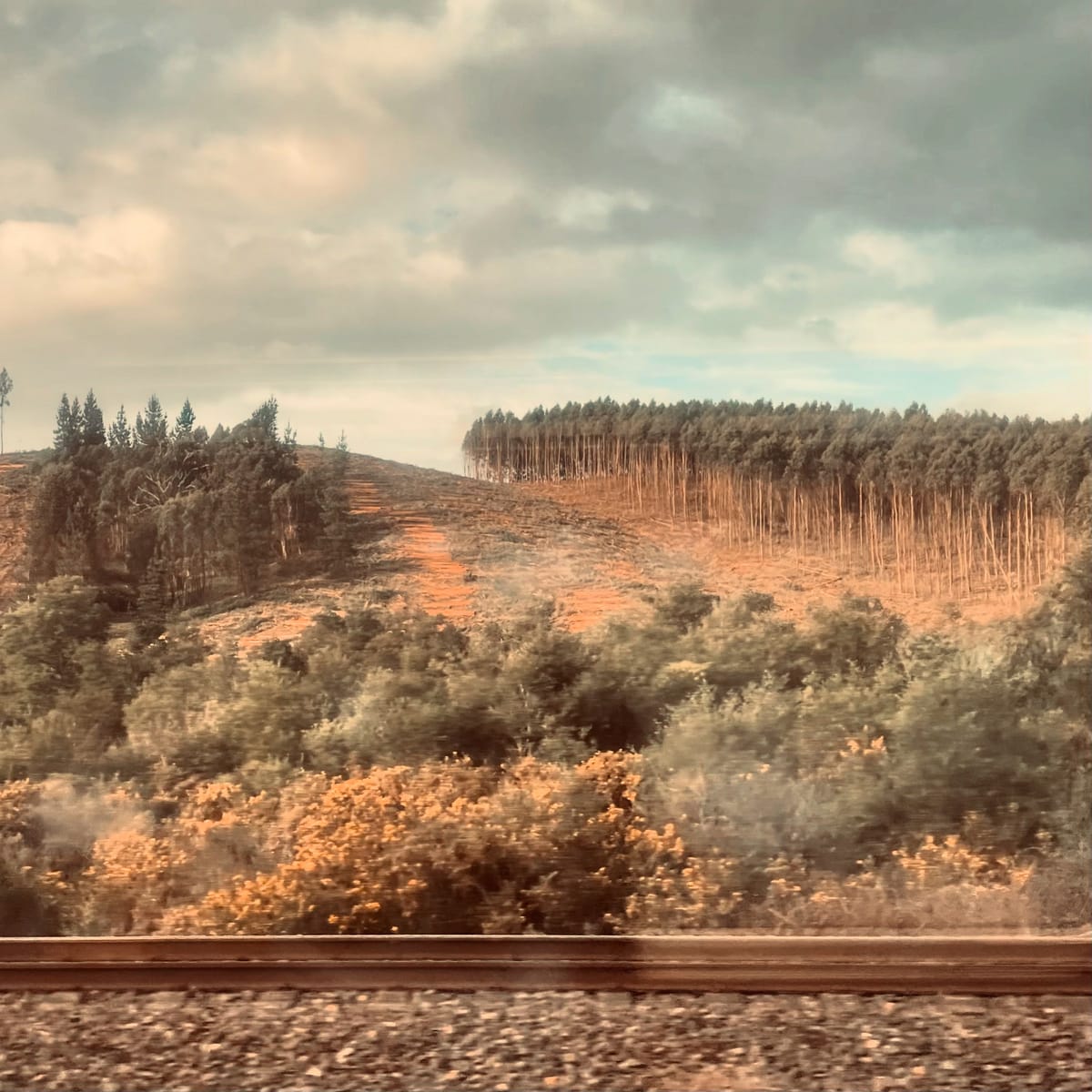
In the winter of last year, I was on a train travelling north to a small country town. As I looked out a window I glimpsed a timber plantation partly harvested. You could see the stark line demarcating forest from a barren open field. Most of this timber, blue gums it seemed at a glance, was likely destined to be pulped for paper. It made me wonder again about the complexities of using timber as an architect.
Timber is a low embodied carbon material that can be farmed, it can replace more carbon intensive structural materials like concrete and steel when converted to an engineered product, and it is renewable if not logged from our immensely valuable native forests. In this form (using mostly softwoods) timber is a construction material with many environmental benefits. On the other hand, the innate strength and durability of solid hardwoods and the beauty of their close grains and warm colours, come at a significant environmental cost to our established forest ecosystem.
In Victoria, for building construction we have typically used a combination of plantation softwood (radiata pine) on a 20-30 year harvest rotation and native forest hardwoods (Victorian Ash, Yellow Stringybark, Ironbark and the like) harvested on longer 60-120 year rotations. We also import additional native forest timbers to meet overall demand.
However, in 2020, timber harvesting in old growth forests ended in Victoria. In 2024, the state government ceased native timber harvesting in Victorian state forests (logging on private land is still permitted). It also announced plans to significantly expand the public forest reserve of the state. Given the ongoing negative effects of logging on native forest*, this was a hugely significant step. How effectively these changes are being implemented is still the subject of ongoing debate.
So, gradually, the pure, uniform, older growth hardwood logged in a native forest and cut by a saw into refined, luxurious, timber pieces is becoming more difficult to source. Selective logging of hardwood species within privately owned native forest is far more sustainable than clear felling because it is more surgical, but still involves cutting down older trees in established forest areas. There are other alternatives to logging native forest timber that include recycled and salvaged pieces but unfortunately they are also ultimately finite resources.
The least impactful form of timber is a manufactured product utilising farmed trees, mostly radiata pine (occasionally other species like shining gum in Tasmania, or hoop pine in Queensland, are harvested for this purpose). It is a material that is more raw, industrial and commonplace, variations of common plywood, laminated and layered to greater thicknesses. For a timber structure to be better environmentally than concrete or steel it must also be salvaged and reused at the end of a building's life. Left to rot or burn it will release stored carbon dioxide straight back into the atmosphere.
Plantation farming also has its challenges, to avoid monocultures and impoverished ecosystems. Although it was somewhat of a shock to see the temporarily denuded landscape of the plantation outside my train window, it is still surely better than removing established native forest.
In a more general sense, that view from the train highlighted to me how voracious we are in terms of consuming our environment. A reminder too, that we should always understand as much as we can about the provenance of the materials we use. We need a rekindling of our resourcefulness, to make new things without being blind to where they have come from or indeed may end up.
*According to a 2020 ANU study by Chris Taylor and David B. Lindenmayer ('Temporal fragmentation of a critically endangered forest ecosystem') around 70% of Mountain Ash forests and 65% of Alpine Ash forests in Victoria were disturbed (directly or within 200m) either by industrial logging or the bushfires of 2009, over the previous twenty years.