Neither Commonplace or Pure
If I think about how I was taught about architecture in the late 1980's, it was at the tail end of the post-modern era that celebrated the thin signage of the Las Vegas strip. The commonplace was okay, which meant that ideas, form and language were important. Around the same time the early work of Frank Gehry, where found materials were assembled in a way that pulled apart conventions and defied expectation, was very influential. The first book about architecture that I purchased was a compendium of Gehry's projects that included, most strikingly, the renovation of his own house. It wrapped a new fragmented envelope of raw materials like a stage set around an existing building - an adaptation, a strange architectural hybrid.
There was another train of thought too, a through line, from modernism which revered the purity of materials found in a crafted old growth hardwood timber beam, a perfectly poured concrete structure or a transparent glass and aluminium curtain wall. It was, and still is, aesthetically seductive but can rely upon the impacts of extraction, deforestation, and manufacturing on our environment, remaining in the background.
Back then, there was also a fringe university subject about environmental sustainability. We learned about the Club of Rome and its ideas around limits to growth, and the GAIA hypothesis of a self-sustaining ecosystem, but it was not yet mainstream thinking. A broad and valuable knowledge base, the subject mostly focused on how to reduce energy consumption in buildings using passive solar design principles, and other more radical techniques like geothermal heat exchange. What is now called 'scope 3' emissions (greenhouse gas emissions generated off site) were not so much on the radar. Given that most of our electricity back then came from dirty coal fired power stations, this was understandable. That subject was being taught over thirty five years ago. It goes to show how long we have known that climate change and environmental degradation is a serious problem.
Of course, we are now at the point where our energy grid is increasingly powered by renewable energy, and many of those pure material resources are becoming increasingly scarce. Their impacts on our environment are being scrutinised and their carbon footprints are being measured more accurately by the day. Re-cycling salvaged material, up-cycling waste products and finding renewable sources is becoming the norm.
So the materials we increasingly use as architects are neither commonplace or pure, but more so amalgams. Natural fast growth timber and glue. Recycled rubber and natural cork. Linseed oil, wood flour, pine rosin and limestone. And so on. They are hybrid materials that have their own character - layered, pointillist, rough, imprecise or machined. Their appearance often reveals the pattern of their making.
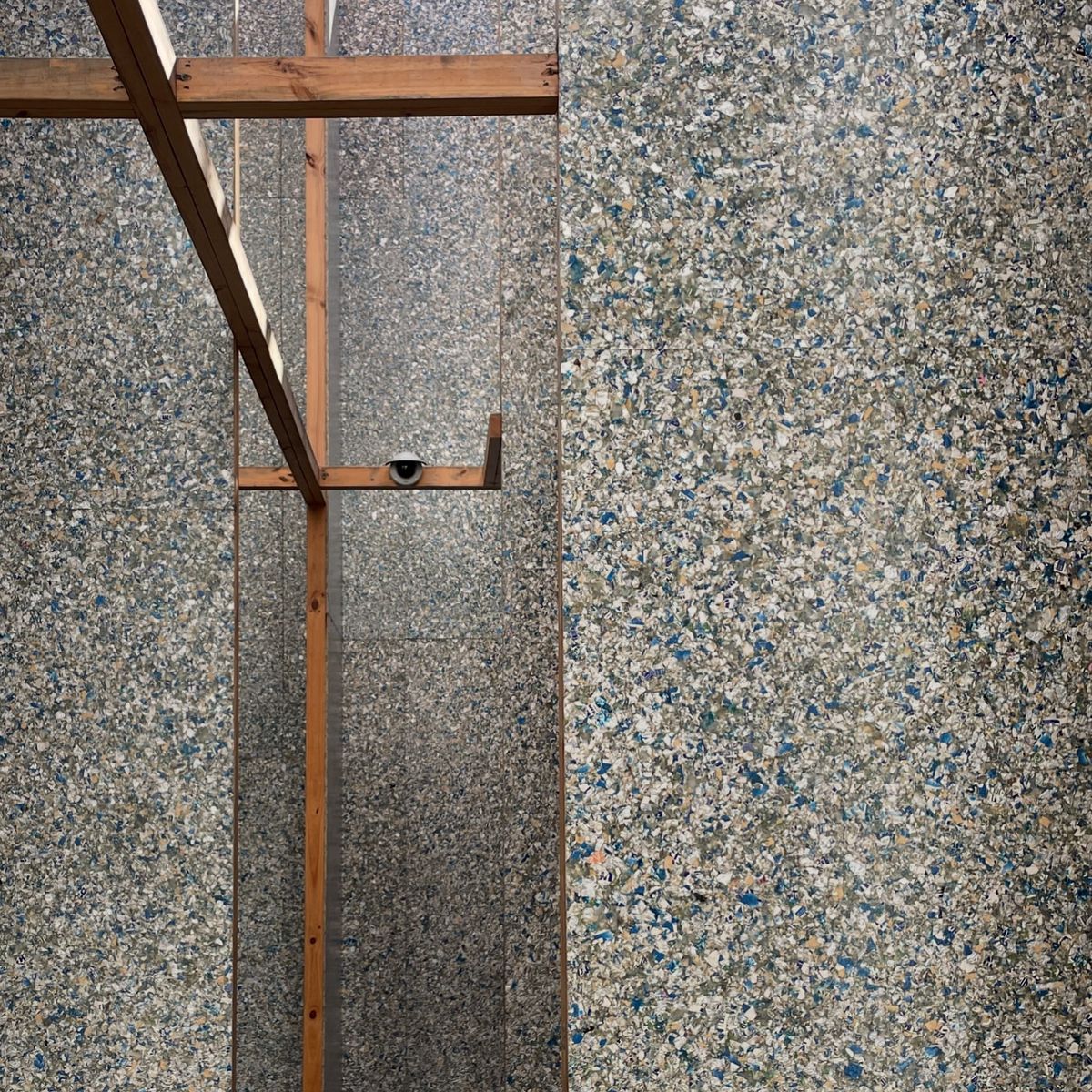
The NGV's summer pavilion for 2024 was 'Home Truth' by Breathe Architecture and it questioned how much space we really needed in a typical suburban Australian home. I was quite taken by the up-cycled packaging waste that clad a utilitarian radiata pine frame to create the pavilion itself. From a distance the panels appeared a consistent soft green. More closely, you could see the television noise pattern of its constituent parts beginning to emerge. At just an arms length away, you can read random parts of labels and the myriad colours of the pattern. It didn't shy away from its raw beginnings, and was endlessly intriguing because of it.
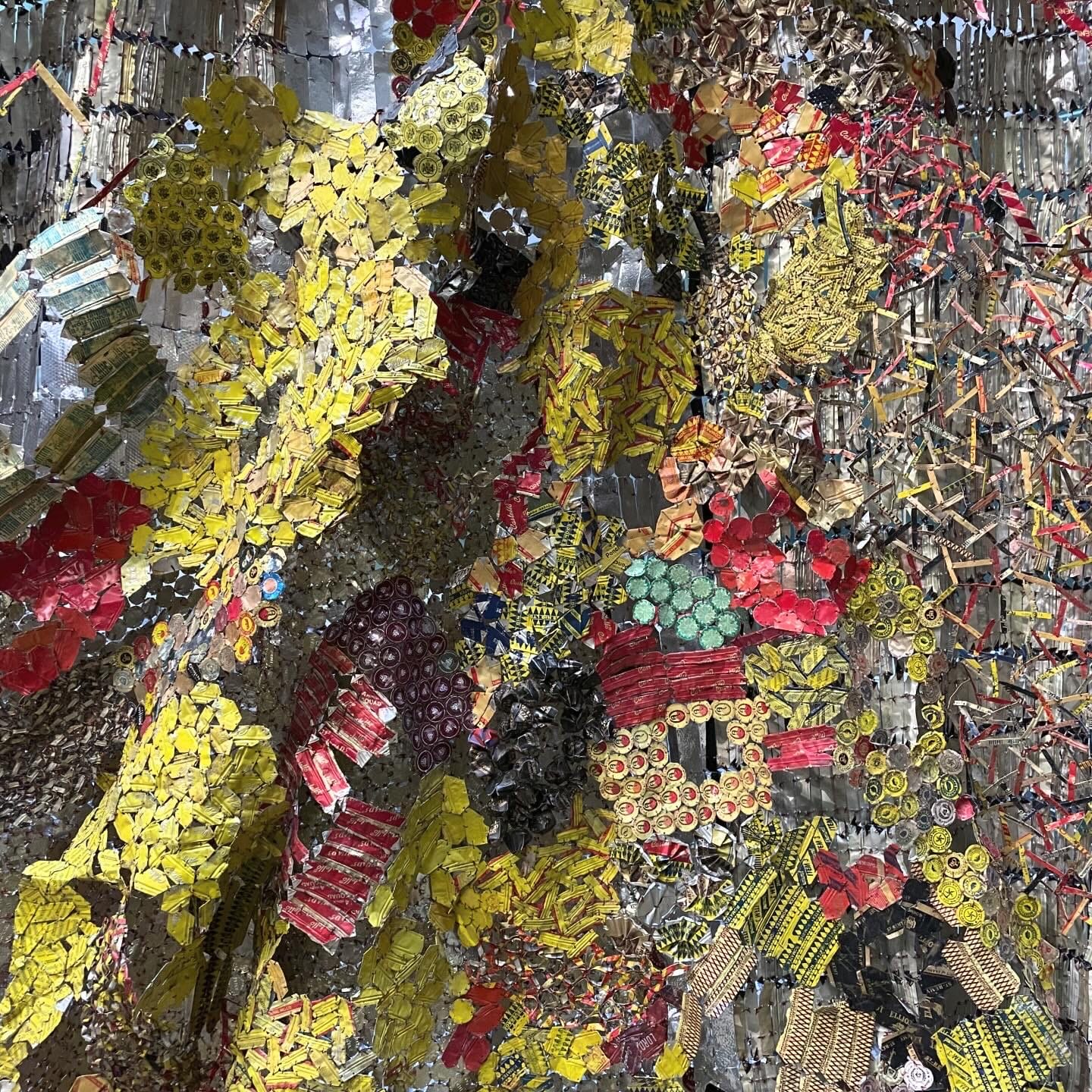
It called to mind the extraordinary works of El Anatsui, the Ghanian artist who uses recycled bottle tops and other found fragments in his practice. He was recently commissioned to create a large format exhibit in the turbine hall of the Tate Modern. The kaleidoscopic detail at a small scale holds together as an overall larger fabric and tells many stories. The combination of pine framing and cheap up-cycled panels of 'Home Truth' was also a little like Gehry's house renovation, not as formally complex for sure but perhaps a not-too-distant cousin in its use of counterpoint and contrast. These are lessons in bringing together found objects, remaking the commonplace and letting go of the pure as we pursue a different material path in the future.